Souvenir or Simplification? The Uncomfortable Economics of Selling a Printing Revolution
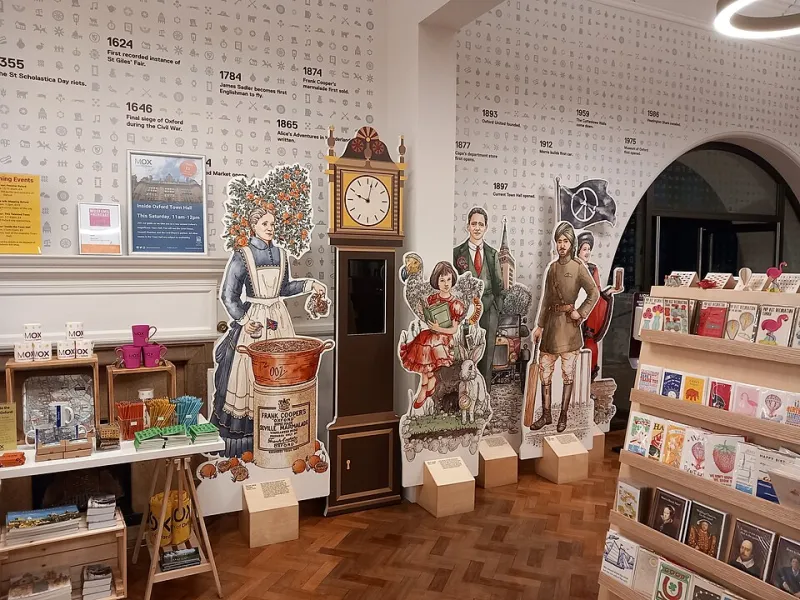
Photo: The History Wizard of Cambridge, CC0, via Wikimedia Commons
The table by the exit is a strange place to remember a revolution. In 2026, a visitor to an American museum shop can buy a Hangul type charm, a small letterpress kit, a notebook stamped with a movable-type pattern, or a tote bag bearing a phrase about printing. None of these objects is Jikji. Most are not even Korean. But together they form one of the most visible ways that Americans encounter the story of the world's first extant book printed with movable metal type.
That is why the gift shop deserves more attention than it usually receives. Merchandise is not outside the museum's interpretive work. It is part of it. The question is whether the objects deepen curiosity or flatten a complex heritage into something easy to photograph and easy to forget.
The Table by the Exit
Buyers at U.S. museum shops describe a familiar dynamic. Visitors want something tactile and affordable. A tote bag costs less than a catalog. A charm fits in a pocket. A letterpress kit promises a hands-on experience. These objects can be entry points, especially for people who would not read a scholarly label.
But the same objects can travel far from their context. A Hangul charm may be sold without explanation of Hangul's creation or its relationship to Korean printing. A letterpress kit may teach the mechanics of movable type while saying nothing about Korea in 1377. A notebook may use a decorative motif that looks historical but is not connected to any specific object.
One buyer at a mid-sized art museum, who asked not to be named because she was not authorized to speak publicly, said the challenge is balancing what sells with what educates. She noted that inexpensive items often pay for themselves and support the shop's operations. Expensive, well-researched objects often do not.
The Buyer's Arithmetic
Museum shops are not charities. They face wholesale minimums, shipping costs, licensing fees, and limited shelf space. A small museum may be offered a Korean-themed product only if it orders in quantity. A designer may be asked to produce something that photographs well for social media. Sustainability concerns can raise costs further.
The result is a narrow range of products. Tote bags, postcards, magnets, notebooks, and enamel pins dominate because they are cheap to produce and easy to display. More interpretive objects, such as a carefully researched facsimile packet or a bilingual activity guide, require more investment and more staff time.
That arithmetic matters. If the shop is the only place where a visitor encounters Korean printing history, then the commercial logic of the shop becomes an interpretive force. It determines which parts of the story are visible and which disappear.
What a Tote Can and Cannot Carry
A tote bag can carry a memory. It can signal affiliation. It can make a visitor feel connected to an exhibition. That is not trivial. Museums rely on such objects to extend the visit into daily life.
A tote bag cannot carry context. It cannot explain that Jikji was printed at Heungdeoksa Temple in Cheongju in 1377. It cannot explain the difference between movable metal type and woodblock printing. It cannot describe how the book survived and where it is now held. Those tasks require labels, programs, and human interpretation.
The risk is not that merchandise exists. The risk is that it becomes the primary text. If a visitor leaves with a notebook but no understanding of the history, the museum has produced a souvenir, not an education.
Design Against Flatness
Some designers are trying to address this. They add inserts with short histories. They use Hangul in accurate ways. They consult curators before choosing motifs. They avoid framing Jikji as a Korean version of a European story, which flattens both histories.
Educators have a role as well. A letterpress kit can be paired with a classroom activity that explains the Korean context. A tote bag can carry a QR code to a digital exhibition. A charm can come with a one-page story about Hangul and metal type.
None of this is expensive. It is a matter of intention. The most effective merchandise does not pretend to be a scholarly publication. It acts as a doorway.
A Doorway, Not a Diploma
The tote bag test is simple: after the bag wears out, what remains? If the answer is a vague memory of a pretty object, the museum has missed an opportunity. If the answer is a question that leads back to the collection, the shop has done its job.
Museum merchandise should not be asked to carry the full weight of a 14th-century printing revolution. But it should not be exempt from accuracy either. The gift shop is part of the public memory of printing history. It deserves the same care as the label on the wall.