The Unseen Residents of Asian Paper: How Microbial DNA Is Reshaping Conservation Decisions in U.S. Collections
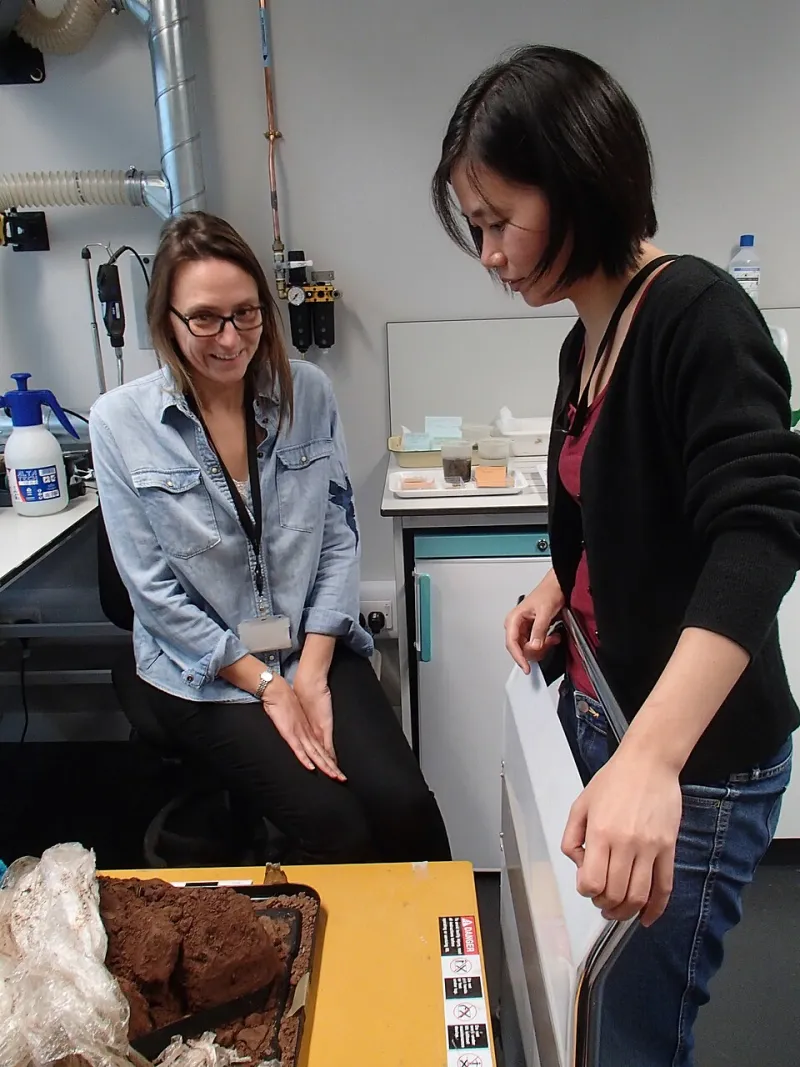
Photo: The British Museum, Pippa Pearce, 2016-10-28 17:00:03, CC BY 2.0, via Wikimedia Commons
In a conservation lab, a small rectangle of mulberry-bast paper rests under a fume hood. It is not a page of Jikji. It is a surrogate: a piece of hanji made in the same tradition, aged under controlled conditions, and used to study what happens when paper, ink, humidity, and time share a shelf. The question is not whether microbes are present. They always are. The question is which ones are there, what they are doing, and whether their activity can be detected before it becomes visible as foxing, staining, or loss.
That question has become more urgent as museums in the United States deepen their holdings of Korean, Chinese, and Japanese printed materials. Many of these objects are stable in cool, dry storage. Many are not. And the early signs of biological deterioration are often invisible to the naked eye.
The Paper Is an Ecosystem
Jikji-era paper is commonly associated with the Korean paper tradition known as hanji, made from the inner bark of the paper mulberry. Its long fibers and sheet structure give it strength and flexibility, but paper is also a composite material. It contains cellulose, hemicellulose, lignin in varying amounts, sizing agents, fillers, inks, and accumulated dust. Each of these can serve as a nutrient source or a habitat for microorganisms.
In practical terms, a printed page is a landscape. Bacteria and fungi colonize surfaces, fibers, and the spaces between sheets. Some are dormant spores. Some are active only when moisture rises. Some produce pigments. Some secrete enzymes that break down cellulose. A conservator sees the result as a stain or a weakened edge. A microbiologist sees a community with a history.
Reading DNA Without Reading the Page
The laboratory techniques now entering conservation are variations on methods long used in environmental microbiology. A conservator or scientist takes a very small sample: a surface swab, a fiber fragment, or a sample of dust from a storage box. DNA is extracted, and specific genetic markers are sequenced.
For bacteria, laboratories often sequence the 16S ribosomal RNA gene, a kind of genetic barcode that helps identify broad groups. For fungi, they may sequence the internal transcribed spacer region, or ITS. These amplicon methods are relatively affordable and can reveal which organisms are present. Shotgun metagenomics goes further, sequencing much of the DNA in a sample and offering clues about metabolic functions: which organisms may be capable of degrading cellulose, tolerating low moisture, or producing acids.
The methods are powerful, but they are not magic. Paper samples are low in biomass, so contamination is a real risk. Reference databases are uneven, especially for environmental fungi. A sequence may identify a genus but not a species. And DNA can persist after an organism is dead, so presence is not the same as activity.
That is why sequencing is usually paired with older tools: culturing, microscopy, ATP measurements, colorimetry, and environmental monitoring. The goal is not to replace the conservator's eye. It is to give that eye a earlier warning system.
From Sequence to Decision
For American collections, the practical value lies in triage. A museum with thousands of East Asian printed items cannot treat every object as a research subject. It can, however, sample storage environments, monitor boxes and folders, and sequence selected materials that show ambiguous symptoms.
If sequencing repeatedly detects moisture-loving fungi in a particular cabinet, the problem may be the microclimate rather than the object. If a group of prints shows a bacterial community associated with paper degradation, the conservator may prioritize that group for examination, rehousing, or improved enclosure. If a sample from a rarely consulted volume shows no active biological signal, the institution may avoid unnecessary intervention.
The findings can also inform environmental policy. Many U.S. museums now operate with tighter energy budgets and broader sustainability commitments. Sequencing can help staff argue for targeted climate control rather than blanket changes. It can support the case for cold storage for selected photographs and works on paper, or for better housekeeping in storage areas.
None of this is a substitute for professional judgment. Conservation decisions still depend on condition, value, use, and institutional mission. A private collector with a single fragile Korean print may need a different approach from a university archive with a teaching collection. A small historical society may need a regional conservation center more than a sequencing lab.
What U.S. Collections Should Do Now
For institutions holding Jikji-era materials or comparable Asian printed artifacts, the first step is documentation. Record storage conditions, enclosure types, and any visible symptoms. Establish a baseline before changing anything. If biological deterioration is suspected, consult a conservator before sampling. Sampling should be minimal, justified, and documented.
Second, build partnerships. University microbiology departments, state conservation centers, and library science programs may offer access to sequencing expertise. A small museum does not need its own laboratory. It needs a clear question and a reliable collaborator.
Third, treat data with humility. A microbial sequence is one line of evidence. It does not by itself prove that an object is deteriorating, and it does not dictate a treatment. It should be interpreted alongside condition reports, environmental logs, and historical context.
Finally, consider the ethical dimension. Sampling historical and sacred materials requires permissions and cultural sensitivity. Korean collections in the United States are not merely scientific specimens. They are heritage objects with communities of origin and ongoing relationships to institutions abroad.
The microbiome of a masterpiece is not a curiosity. It is a record of use, storage, and survival. For American collections, learning to read that record is part of learning to care for it.