Set by Hand, Read by Heart: A Week Without Print Buttons, in the Spirit of 1377
This is an opinion piece, and it begins with a confession: I spent a week setting type by hand, and it changed how I think about everything else I publish.
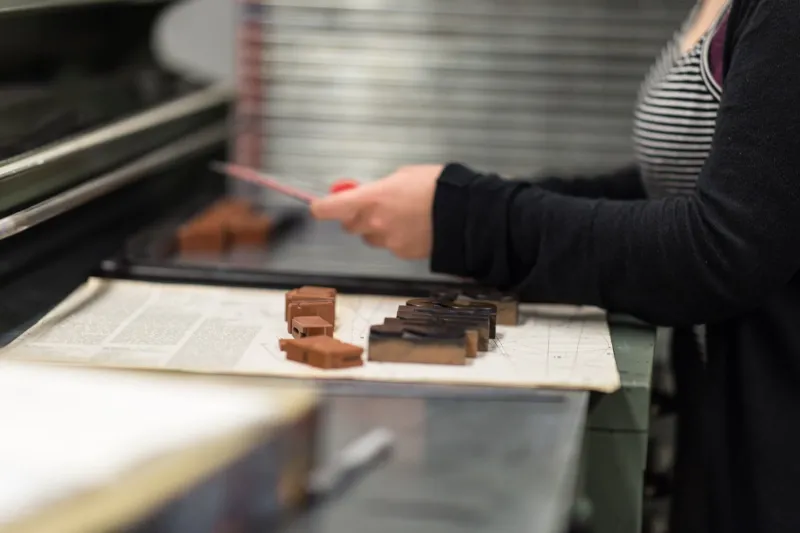
The premise was simple. As part of a workshop at a regional printing heritage center, I committed to producing one page of text—real text, my own writing—using a composing stick, a California job case, and a hand press. No delete key. No autocorrect. No publishing until every letter sat exactly where it belonged. The exercise was framed as an homage to the craftspeople of 1377 who produced Jikji, the earliest surviving book printed with movable metal type.
It became something else entirely: an argument.
The Tyranny of the Instant Page
I write for a living, which means I publish constantly and think rarely. Draft, post, scroll, repeat. The digital tools that make this possible also make it weightless. Nothing I publish costs me anything—not time, not attention, not consequence. My error rate reflects that. So does my regret rate, which is to say, I rarely register errors at all.
Hand-set type is the opposite of weightless. Every word must be chosen before it is placed, because placing is expensive. A typo is not a keystroke; it is a retrieval, a correction, a re-justification of the entire line. By day two, I was reading my own sentences aloud before committing them—something I have not done since journalism school. By day four, I was cutting sentences I would have published without a second thought.
The type, in other words, was editing me.
What Jikji's Makers Understood
We tend to narrate printing history as a story of speed—more books, faster, for more people. But the artisans behind Jikji worked at the pace of deliberation. Each character was cut, cast, and set with the expectation that it would be read closely, possibly for centuries. The care embedded in that process is part of why the surviving pages still exist for us to argue about.
That care is precisely what our information economy has optimized away. We have more text than any civilization in history and less reason to trust any of it. The problem is not that we publish too much; it is that we publish too cheaply. When content costs nothing to produce, it costs nothing to abandon, and audiences learn to value it accordingly.
The Case for Slow Information
I am not romantic about the past, and I am not proposing we abandon the press, the pixel, or the feed. I am proposing a habit, borrowed from a workshop table: a personal standard of deliberateness for anything we ask others to read.
In practice, that might mean:
- A mandatory pause before publishing. Twenty-four hours for anything non-urgent. The draft will still be there; your certainty may not be.
- Reading your own work aloud. The ear catches what the eye forgives.
- Publishing less, keeping more. A smaller body of work you stand behind beats a feed you scroll past.
- Teaching the cost of words. Put a child in front of a composing stick, as my workshop did, and watch them choose their words differently for a week.
Conservation, at the Jikji Museum and everywhere else, is usually understood as protecting old objects. But the deepest conservation work is cultural: preserving not just the artifact of careful communication but the practice of it. A book survives 650 years because someone made it well and someone else decided it was worth keeping. Both are acts of restraint.
One Week, One Page
My page came off the press imperfect. There is a spacing error in the fourth line that I chose to leave, a small scar from the learning. It hangs above my desk now, next to a reproduction of a Jikji page.
I still publish daily. But I no longer confuse speed with fluency. The scribes and type casters of the fourteenth century were not slow because they lacked options. They were deliberate because they understood what their words were for. That, more than any technology, is what we stand to recover.