Good Intentions, Fragile Paper: The Stewardship Crisis Facing America's Small Museums

Photo by Photo by Geri Forsaith on Unsplash on Unsplash
The offer arrives the way these offers always do: a local family, clearing an estate, wishes to donate what they believe is an old Asian printed book to the county historical society. The board is flattered. The item is accepted. And somewhere in a basement storage room without humidity control, a fragile piece of East Asian printing heritage begins the slow work of deteriorating.
This scenario plays out regularly in small museums and historical societies across the United States, and the time has come to say plainly what many conservators already whisper: accepting an artifact you cannot care for is not preservation. It is delayed loss.
What Jikji's Own Story Teaches About Neglect
The museum's namesake offers a sobering precedent. Of Jikji, printed in 1377 with movable metal type, only a single volume survives today—and it survives by a thread. The book languished for centuries with little protection, its significance unrecognized, before French diplomat Émile Bourdaret acquired it in Korea and it eventually reached the Bibliothèque nationale de France. We do not know how many companion volumes, printed in the same era by the same hands, simply crumbled away in the course of ordinary, well-meaning neglect.
That is the lesson worth sitting with: the greatest threat to printed heritage is rarely malice. It is indifference dressed as stewardship.
The Anatomy of the Dilemma
Small American institutions face real constraints. A volunteer-run historical society may operate on an annual budget smaller than the cost of a single professional conservation assessment. East Asian printed materials pose particular challenges: many are woodblock-printed on handmade papers with adhesives and pigments that respond badly to fluctuating humidity; many require language expertise simply to catalog; and many arrive with provenance gaps that complicate both scholarship and ethics.
Yet declining every donation carries its own moral cost. Artifacts refused by institutions often end up in attics, or on the open market, or in the trash. The dilemma is genuine: neither acceptance without capacity nor refusal without alternatives serves the object.
The Case for a National Stewardship Compact
The solution is not to shame small institutions but to connect them. We propose a national stewardship compact among American museums, libraries, and historical societies, built on three commitments:
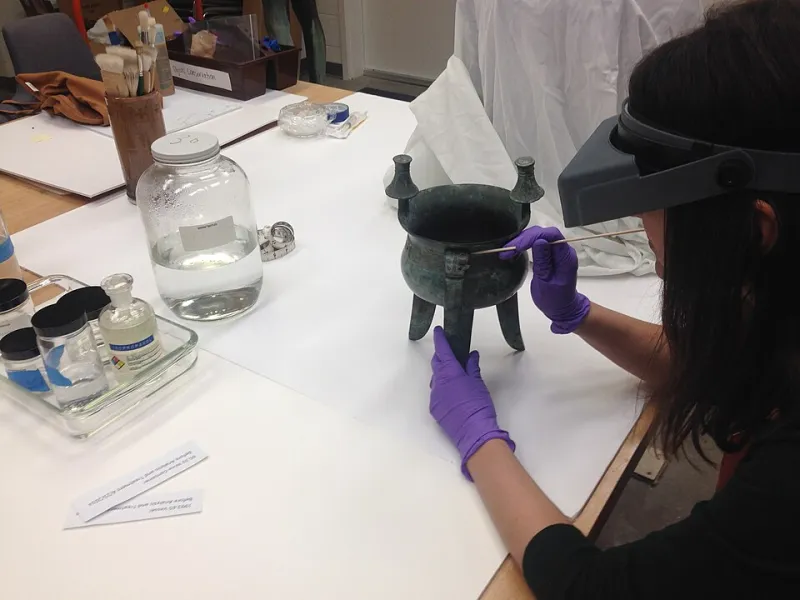
Shared conservation hubs. Regional centers equipped with proper climate control and trained staff would accept deposits from small institutions, which would retain ownership and access. No county society needs its ownHVAC system if a state university will house its treasures.
Long-term loans instead of permanent acquisitions. When a small museum lacks capacity, a documented long-term loan to a better-equipped institution—reversible, transparent, and revisited on a fixed schedule—protects the object without permanently severing it from its community.
Transparency requirements. No artifact should be accepted without honest documentation of condition, provenance, and the receiving institution's actual storage capabilities. Donors deserve to know the truth about what will happen to their family's book after the handshake.
Choosing Stewardship Over Sentiment
None of this diminishes the sincere civic pride that leads a small museum to say yes. That instinct—the desire to keep history local, to honor a donor's trust—is among the best impulses in American cultural life. But Jikji's near-disappearance reminds us that objects outlast the institutions and intentions around them only when someone, somewhere, has the means to protect them.
The most responsible word a small museum can sometimes say is not "no" but "not alone." A national stewardship compact would make that answer possible—and ensure that the next fragile book offered to a small American society survives long enough to matter.