From Cheongju to the Coffee Shop: The American Book Clubs Falling for a 14th-Century Printing Story

Every book club has its outlier month. Someone proposes a doorstop biography, a genre experiment, a translated novella nobody finishes. Increasingly, though, American reading groups are proposing something stranger: a session devoted to Jikji, a 1377 Korean Buddhist text most members had never heard of—and loving it.
We checked in with three clubs from different corners of the country to find out why.
Minneapolis: The History Group That Didn't Expect to Cry
The Longfellow History Circle, a twelve-person club that meets in a branch of the Hennepin County Library, chose Jikji as part of a 'technologies that changed the world' cycle. What members expected was a dry session about printing mechanics. What they got, according to facilitator Dana Whitcomb, was something closer to grief and gratitude.
"Only a fragment survives—a fraction of the original volumes, held in France," Whitcomb says. "We spent twenty minutes just talking about what it means that most of the print run vanished. One member asked what books from our own era will survive. Nobody had an easy answer."
The club's discussion questions, which they've shared with other groups online, include: What does it mean that a Buddhist text, not a royal decree, was among the first things a society chose to print? and Who benefits when the story of invention is told through one name only?
Austin: The Librarians' Club and the Literacy Question
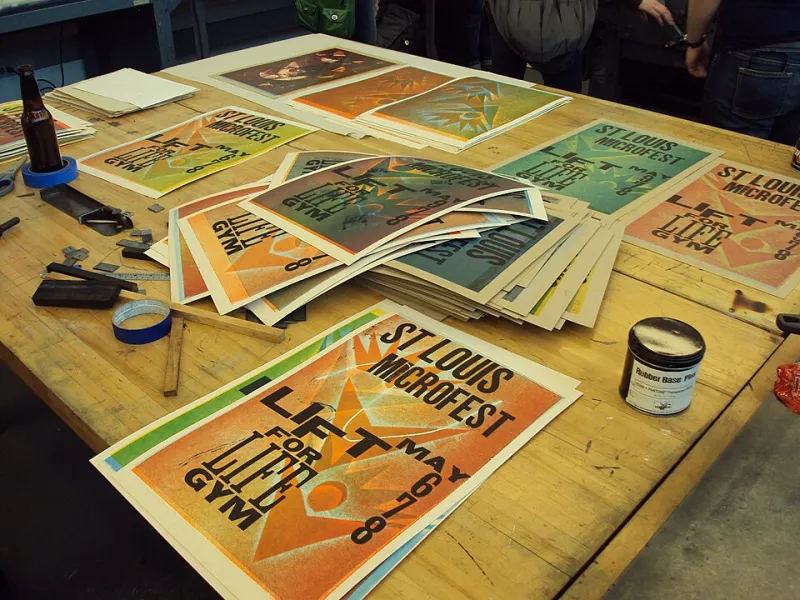
In Texas, a reading group made up largely of retired and working librarians paired Jikji with a visit to a local letterpress workshop. Their angle was literacy: what happens to a society when text becomes reproducible?
"We kept circling back to the fact that printing in 1377 Korea was tied to spreading teachings, not selling things," says member Rosa Delgado. "One of our retired school librarians said the session felt like a mirror for debates about AI and who gets access to knowledge. I don't think anyone expected a 650-year-old book to feel current."
The club's follow-up meeting added a hands-on component: members set a single line of type by hand and printed a bookmark. "Slowing down to place one letter at a time," Delgado notes, "told us more about the book than any article could."
Portland: The Book Club That Turned Into a Field Trip
The Sellwood Page Turners took the most literal interpretation of the assignment. After a session on Jikji's story, they organized a group visit to a regional exhibition of East Asian print heritage and a talk by a local conservator.
"Our discussion questions were pretty simple," says organizer Tom Nakagawa. "Why don't more Americans know this story? What would it change if they did? The answers turned into three extra meetings." The club is now lobbying their neighborhood association to add a printing-history event to the summer street fair.
Why It Works for Groups
There's a practical reason Jikji suits book clubs: the subject is compact, rich, and welcoming to mixed reading levels. Members can engage through history, religion, technology, design, or politics, depending on their interests. Discussion rarely stalls because the questions are genuinely open—about memory, preservation, and who gets credit for changing the world.
If your club wants to try it, keep the session short, add a visual element—facsimile pages are widely available online—and end with the question every club so far has asked: what else don't we know?
The answer, we suspect, is what keeps these groups coming back.