The Composing Stick Meets Hangul: Inside America's Letterpress Shops Learning to Print Like 1377
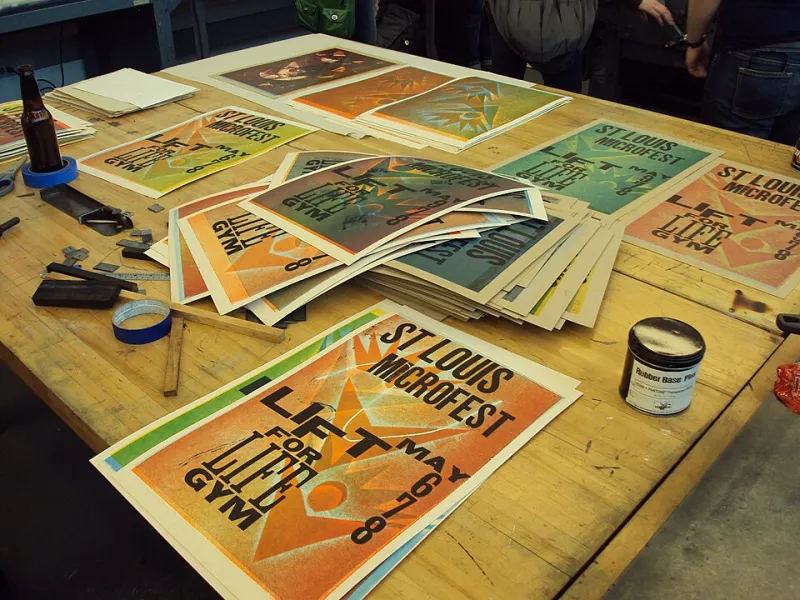
Photo: Michellecornelison, CC BY-SA 4.0, via Wikimedia Commons
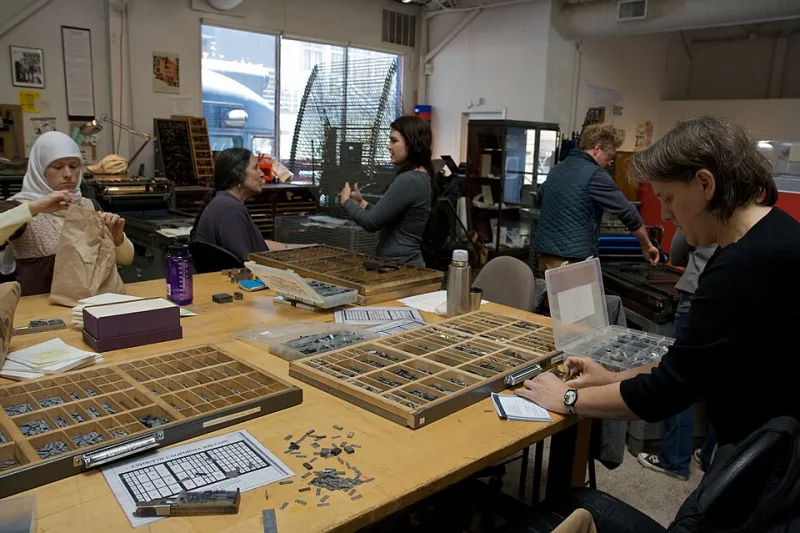
In a converted warehouse studio in Portland, Oregon, a journeyman printer pulls a proof and stops mid-motion. The impression on the cotton paper is crisp, but the words are not English. They are Korean—hangul characters set by hand, letter by letter, on a Vandercook proof press built in 1952.
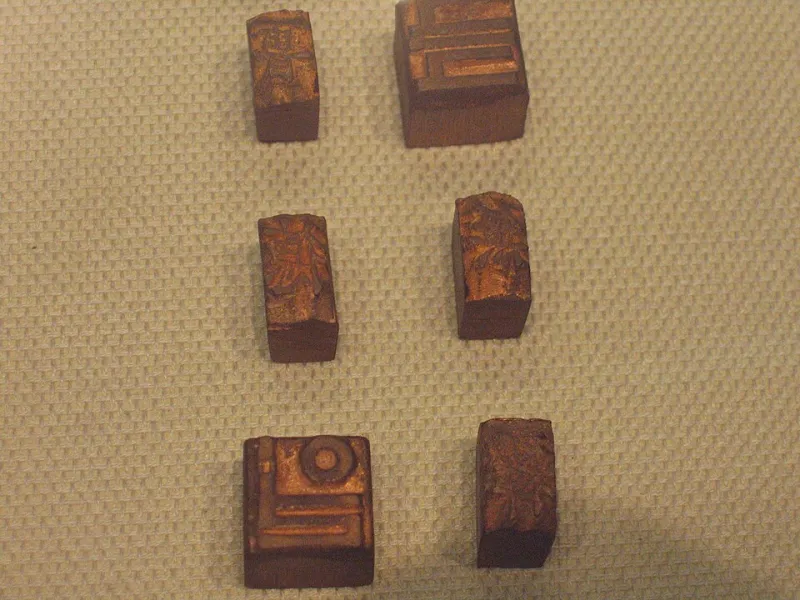
Scenes like this are becoming less rare. Across the United States, a small but dedicated cohort of letterpress printers is incorporating Korean movable type into work that has, for generations, been almost exclusively Latin. Their teacher is an unlikely one: Jikji, the Buddhist text printed in Cheongju in 1377, now recognized as the oldest extant book produced with movable metal type.
A Different Grammar of Type
For printers trained on the Latin alphabet, the first encounter with hangul type is disorienting. English typography is built on twenty-six atomic units. Hangul, by contrast, is a system of assembly: consonant and vowel jamo combine into syllabic blocks, and those blocks stack into a grid of near-uniform density.
"The first thing you notice is that you're not composing words—you're composing cells," says one Midwest printer who has spent two years acquiring reproduction hangul type. "Each block is a complete sound. The spacing logic is closer to setting mosaic tile than setting Shakespeare."
That difference is not merely aesthetic. It is a window into the engineering decisions of the Goryeo dynasty founders, who cast type for a writing system that demanded it. Where Gutenberg's workshop optimized for a small, fixed alphabet, Korean founders optimized for combination and recombination—an approach that modern type designers now recognize as remarkably forward-looking.
What Jikji's Typeface Still Teaches
The surviving leaves of Jikji, held today at the Bibliothèque nationale de France, display a typeface of startling maturity: even color on the page, confident curves, strokes that hold their weight at small sizes. Printers who study facsimiles report that the craft lessons are immediate.
"You see how they solved ink distribution on absorbent hanji paper," notes a California-based educator who runs letterpress workshops. "No American shop learns that from setting Baskerville. It's a whole parallel tradition of problem-solving."
That parallel tradition is the point. For the Jikji Museum, the revival's significance lies in what it restores to the historical record: printing was not a single European invention radiating outward, but a set of independent innovations—each with its own materials, logic, and beauty.
Why It Matters Now
The hangul revival remains small. Type in Korean characters is difficult to source; most studios work with reproductions or digitized casts. But its growth tracks a broader hunger among American makers to understand printing as a global inheritance rather than a single lineage.
Every time a printer in Ohio or Texas inks a hangul block, something of Jikji's world is briefly made present again. The composing stick, it turns out, can hold more than one civilization's alphabet—and holding both changes how the printer sees each.