Rewriting the Syllabus: How Jikji Is Transforming the Way American Universities Teach Printing History
Photo: Stinglehammer, CC BY-SA 4.0, via Wikimedia Commons
For generations, the standard American university course on the history of the book began—and often ended—with Johannes Gutenberg. The Mainz printer's 42-line Bible occupied the opening weeks of countless syllabi, framing movable type as a distinctly European invention with a distinctly European legacy. That framing is now under serious revision. From research universities in the Midwest to liberal arts colleges on the East Coast, faculty are inserting a new chapter at the very beginning of that story: the Jikji.
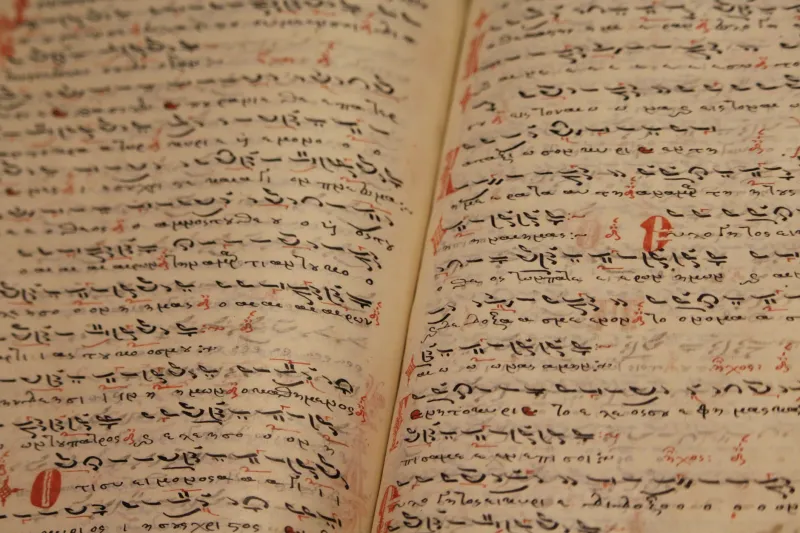
Printed in Korea in 1377 using cast metal type—more than seventy years before Gutenberg's Bible—the Jikji Simche Yojeol is recognized by UNESCO as the world's oldest extant book produced with movable metal type. Yet for much of the twentieth century, it remained absent from Western academic discourse. That absence is no longer tenable, and a growing cohort of American educators is making certain their students understand why.
A Pedagogical Turning Point
The shift began gradually, propelled in part by UNESCO's 2001 inscription of Jikji on the Memory of the World Register and accelerated by a broader reckoning within humanities departments over whose histories have been centered and whose have been marginalized. For library science programs in particular, the implications were direct. If the foundational narrative of print culture omitted one of its most significant chapters, what did that say about the field's relationship to non-Western knowledge systems?
Several programs have responded by redesigning their core courses from the ground up. At institutions where "History of the Book" or "Information and Society" courses were once anchored almost exclusively in European manuscript and print traditions, instructors are now devoting substantial time to the technological and intellectual achievements of the Goryeo dynasty. The Jikji serves as an entry point—not merely as a corrective footnote, but as a lens through which students can examine broader questions about cultural diffusion, technological innovation, and the politics of historical memory.
Professors report that students arrive with little to no prior knowledge of Korean printing history, which makes the introduction of Jikji a genuinely revelatory moment in the classroom. The realization that a foundational assumption—that Europe invented the printing press—is incomplete tends to generate productive discomfort and opens conversations about how such gaps come to exist in the first place.
New Courses, New Frameworks
Beyond revisions to existing syllabi, some institutions have launched dedicated courses that place East Asian printing traditions at their center. These offerings, emerging from departments as varied as Asian Studies, History of Science, and Comparative Literature, treat Jikji not as an isolated artifact but as evidence of a sophisticated intellectual and material culture that predates and in many ways parallels developments in Europe.
Such courses often draw on interdisciplinary frameworks, asking students to consider the metallurgical knowledge required to cast individual type characters in bronze, the monastic networks through which texts were commissioned and distributed, and the political conditions of the Goryeo court that made such ambitious publishing projects possible. In doing so, they situate printing history within a much larger global context—one in which Korea, China, and Japan were active participants in the long arc of human communication technology.
Institutional partnerships have played a meaningful role in supporting these curricular developments. Collaborations between university libraries and institutions specializing in East Asian heritage have provided faculty with access to high-resolution digitized facsimiles, scholarly translations, and curatorial expertise. These resources have made it practical for instructors without deep specialization in Korean history to teach Jikji responsibly and rigorously.
Library Science and the Question of Stewardship
Within library and information science programs, the integration of Jikji into coursework carries an additional dimension: it raises fundamental questions about stewardship, provenance, and institutional responsibility. The Jikji's own history—currently held at the Bibliothèque nationale de France, far from its country of origin—makes it a living case study in debates over cultural repatriation and the ethics of collection management.
For students training to become archivists, curators, and librarians, engaging with this history is not merely academic. It prepares them to navigate the complex ethical landscape they will encounter in their professional lives, where questions of who owns a manuscript, who has the right to interpret it, and who bears responsibility for its preservation are increasingly urgent. The Jikji, in this sense, is not just a historical artifact; it is a pedagogical instrument of considerable power.
Some programs have formalized this connection by inviting guest lecturers from preservation organizations and cultural heritage institutions, or by incorporating primary source analysis of digitized Jikji folios into their coursework. These experiential components help students move beyond abstraction and engage directly with the material and intellectual substance of the text.
Resistance, Resources, and the Road Ahead
The curricular shift has not been without friction. Faculty working to introduce Jikji into established programs sometimes encounter institutional inertia—course committees resistant to revising canonical syllabi, or resource constraints that limit access to specialist expertise. In some cases, the challenge is simply one of awareness: instructors who were themselves trained in Eurocentric frameworks may feel underprepared to teach material they never encountered in their own graduate education.
Addressing this gap requires investment at multiple levels. Professional development opportunities, peer-reviewed teaching resources, and stronger networks among scholars of East Asian print culture are all part of the solution. The growing availability of digitized primary sources—including high-quality images of the Jikji itself—has lowered some barriers, but sustained institutional commitment remains essential.
Nevertheless, the trajectory is clear. As American universities continue to grapple with the imperative of inclusive, globally informed curricula, the Jikji stands as both a symbol and a substance of that effort. It is a book that demands to be taught—not because it fits neatly into existing frameworks, but precisely because it challenges them.
A More Complete History
The goal of integrating Jikji into American higher education is not to diminish the significance of Gutenberg or the European print tradition. It is to arrive at a more complete and honest account of human ingenuity—one that acknowledges the full breadth of contributions that different civilizations have made to the technologies we now take for granted.
For students encountering this history for the first time, the experience can be genuinely transformative. It invites them to question what else may have been left out of the stories they have been told, and to approach knowledge itself with greater curiosity and humility. That, perhaps, is the deepest lesson that a seven-hundred-year-old Korean manuscript has to offer a twenty-first-century American classroom.