Ghosts of the Press: The Vanished Printing Collections of the Jikji Era and What Their Disappearance Means for Us Now
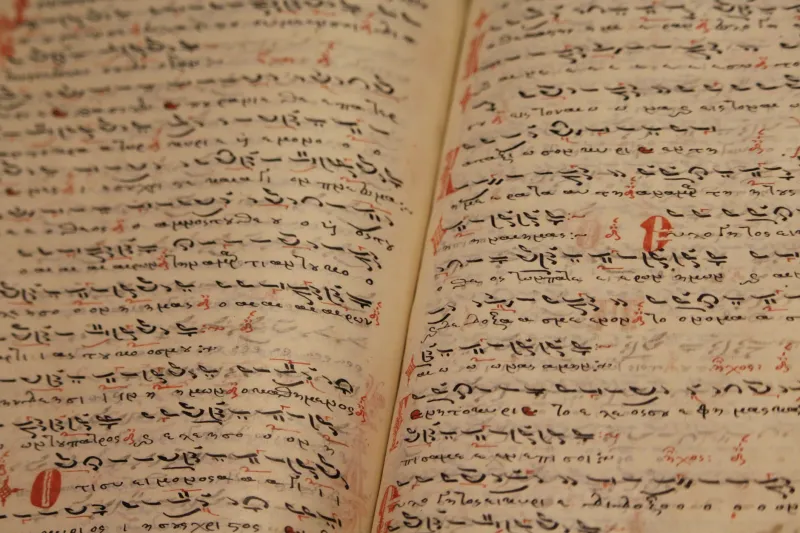
When scholars speak of Jikji—the 1377 Buddhist anthology recognized as the world's oldest extant text produced with movable metal type—they are, by definition, speaking of a survivor. Its survival is extraordinary not because preservation was the norm, but because destruction was. The collections that surrounded Jikji, the monastery libraries and royal repositories that once held dozens or perhaps hundreds of comparable works, are gone. Some vanished in fire. Others were seized, scattered, or quietly dismantled across centuries of political upheaval. A significant portion disappeared during Japan's colonial administration of Korea between 1910 and 1945, when systematic extraction of cultural artifacts reshaped what the historical record would remember.
Understanding what was lost—and reconstructing, even partially, what those collections contained—is one of the most consequential challenges in the field of printing heritage. For an institution like Jikji Museum, committed to preserving and communicating the full story of the world's earliest printed legacy, those gaps in the archive are not footnotes. They are central to the mission.
What the Records Tell Us—and What They Don't
The Goryeo dynasty (918–1392) and the subsequent Joseon period (1392–1897) produced an extraordinary volume of printed material. Buddhist monasteries were among the most prolific centers of publication, and royal printing bureaus under the Joseon court issued texts ranging from Confucian classics to medical encyclopedias. Historical inventories, where they survive, hint at the scale of what once existed.
The Tripitaka Koreana, the massive Buddhist canon carved onto more than 80,000 wooden blocks in the thirteenth century, is perhaps the most famous surviving example of Goryeo print culture. Yet scholars note that the Tripitaka was itself a response to loss—compiled and carved after an earlier version was destroyed during the Khitan invasions of the early eleventh century. This pattern of creation-and-destruction recurs throughout Korean printing history with unsettling regularity.
Court records from the Joseon period reference printing offices and their outputs in considerable detail, but cross-referencing those records against surviving physical collections reveals staggering discrepancies. Works that were officially catalogued, distributed to provincial offices, or cited in later scholarship simply do not appear in any known museum inventory today. Scholars estimate that the surviving corpus of pre-modern Korean printed texts may represent only a fraction—some argue less than ten percent—of what was actually produced.
The Japanese Colonial Period: Documented Dispersal
The most thoroughly documented episode of large-scale collection loss occurred during the Japanese colonial era. Beginning shortly after annexation in 1910, Japanese authorities and private collectors systematically acquired Korean artifacts, often under legally ambiguous or overtly coercive circumstances. Temple collections were particularly vulnerable. Monasteries that had preserved manuscripts and printed texts for centuries found themselves subject to new administrative frameworks that undermined traditional custodial authority.
Archival research conducted in recent decades by Korean and international scholars has identified shipment records, auction catalogs, and private correspondence documenting the transfer of printed materials out of Korea during this period. Some of those items eventually surfaced in Japanese institutions; others entered private collections and have never been publicly traced. A smaller number made their way into European and American holdings, where they were often catalogued generically—as "East Asian manuscripts" or "Buddhist texts"—without the specificity needed to connect them to their origins.
This is not merely a historical grievance. It is an active archival problem. When provenance is obscured, the ability to reconstruct what collections once existed—and therefore to understand the full scope of what has been lost—is severely compromised.
Hypothesized Losses: The Scholarship of Absence
Some of the most intellectually rigorous work in Korean printing history concerns texts that scholars believe existed but cannot confirm. These hypothesized losses are reconstructed through citations in surviving works, references in court documents, and logical inference from what we know about the output of specific printing centers.
Goryeo-era metal type printing, the tradition that produced Jikji, almost certainly yielded more texts than the handful that survive. Jikji itself was printed at Heungdeok Temple in Cheongju; historical records suggest that other temples with comparable resources were engaged in similar projects. The question of what those projects produced—and where those texts went—remains open. Some scholars have proposed that certain works attributed to the early Joseon period may actually be reprints of lost Goryeo originals, a theory that, if confirmed, would significantly alter our understanding of the continuity between the two dynasties' print cultures.
For American audiences accustomed to thinking of archival gaps in terms of damaged or incomplete documents, the Korean case presents a more radical form of absence. We are not dealing with water-damaged pages or missing volumes from an otherwise intact set. We are dealing with the wholesale disappearance of entire categories of cultural production.
What Institutions Can Learn From This History
The losses documented and hypothesized in Korean printing history carry direct implications for how contemporary institutions—museums, libraries, universities, and digital archives—approach the stewardship of rare materials.
First, provenance documentation must be treated as a preservation priority, not an administrative afterthought. The difficulty of reconstructing colonial-era dispersals stems in large part from inadequate record-keeping at the point of acquisition. Institutions holding East Asian printed materials acquired before 1950 bear a particular responsibility to conduct thorough provenance reviews and to make those findings publicly accessible.
Second, digitization alone is insufficient as a preservation strategy. The digital record is dependent on institutional continuity, technological infrastructure, and funding streams that are themselves vulnerable to disruption. The lesson of the vanished Joseon libraries is that no single preservation method is permanent. Redundancy—physical, digital, and institutional—is essential.
Third, international scholarly collaboration must be actively supported. The reconstruction of lost collections depends on connecting fragmented evidence held in archives across Korea, Japan, France, the United Kingdom, and the United States. No single institution possesses enough of the record to work in isolation. Funding bodies and cultural ministries in the US and elsewhere should recognize cross-border archival research as a legitimate and urgent form of heritage preservation.
Finally, community knowledge must be integrated into the institutional record. Oral traditions, local histories, and the institutional memory of religious communities have preserved information about collections that never made it into formal archives. Ethnographic and community-based research has an important role to play alongside conventional archival scholarship.
The Weight of What Is Missing
Jikji endures in the Bibliothèque nationale de France, where it has been held since the late nineteenth century. Its survival is the product of a specific, contingent chain of events—circumstances that did not favor the majority of comparable works. Every conversation about Jikji is therefore also, implicitly, a conversation about everything that did not survive.
At Jikji Museum, we believe that honoring the legacy of the world's earliest movable metal type printing means grappling honestly with the magnitude of what was lost alongside what was preserved. The ghosts of those vanished libraries are not merely historical curiosities. They are a standing argument for the seriousness with which every institution—from a major research library to a small community archive—must approach its custodial responsibilities.
The printing revolution that Jikji represents was never the work of a single book. It was the work of an entire civilization's commitment to recording, transmitting, and preserving knowledge. Reconstructing even the outline of what that civilization produced, and what was taken from it, is an obligation we have not yet fully met.

