Behind the Glass: How American Museums Are Building the Infrastructure to Save Korean Printed Heritage
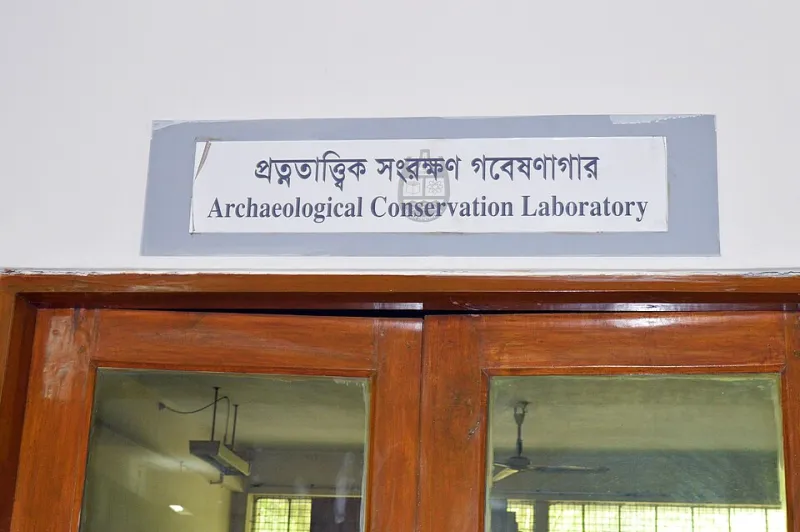
Photo: Moheen Reeyad, CC BY-SA 4.0, via Wikimedia Commons
For decades, the conservation of East Asian printed materials in American institutions occupied a narrow, often underfunded corner of the broader preservation field. Korean manuscripts, in particular, received comparatively little technical attention, treated frequently as secondary to better-known Chinese or Japanese holdings. That calculus has begun to change—and the catalyst, in many respects, is a single fourteenth-century Korean text: Jikji.
The international recognition of Jikji as the world's oldest extant book printed with movable metal type, formalized through its inscription on UNESCO's Memory of the World Register in 2001, introduced a new vocabulary into American museum culture. Conversations that once centered on European incunabula or Chinese woodblock prints now routinely invoke Korean printing heritage as a foundational chapter in the global story of human communication. That conceptual shift has had tangible, institutional consequences.
A Technical Problem Without Easy Answers
Preserving Korean printed materials is not a straightforward extension of existing Western conservation practice. The challenge begins with materials themselves. Traditional Korean paper, known as hanji, is produced from the inner bark of the paper mulberry tree through a labor-intensive process that yields sheets of exceptional durability but distinctive physical properties. Hanji responds differently to humidity fluctuations, adhesives, and cleaning agents than the rag papers common in European manuscripts or the xuan paper associated with Chinese printed works.
Metal type impressions from the Goryeo and Joseon periods carry their own complications. The ink formulations used in early Korean printing often contain organic binders that degrade in ways distinct from European iron gall inks or East Asian carbon-based preparations. Conservators trained primarily in Western or even general East Asian techniques may inadvertently cause damage when applying familiar interventions to unfamiliar substrates.
This technical gap has become increasingly visible as American institutions have acquired or stewarded Korean printed materials without the in-house expertise to properly assess their condition. The growing awareness of Jikji's significance has sharpened the urgency of addressing that gap before further deterioration occurs.
Institutions Taking Action
Several major American museums and research libraries have responded by establishing or significantly expanding dedicated conservation laboratories with East Asian print specializations. While the specific configurations vary by institution, a common pattern has emerged: existing paper conservation studios are being retrofitted with equipment suited to hanji analysis, including fiber identification microscopes, multispectral imaging rigs, and controlled humidity chambers calibrated to the environmental tolerances of Korean paper.
Staffing presents an equally significant challenge. Conservators with deep expertise in Korean printed materials are rare, and American graduate programs in conservation have historically offered limited coursework in this area. To address the pipeline problem, several institutions have entered into formal exchange agreements with conservation training centers in South Korea, enabling American conservators to undertake residencies at facilities with direct access to Korean archival collections and experienced local practitioners. Reciprocal arrangements bring Korean conservators to American labs, accelerating the transfer of specialized knowledge in both directions.
Funding for these initiatives has come from a patchwork of sources. Federal grants through the National Endowment for the Humanities and the Institute of Museum and Library Services have supported equipment acquisition and staff training. Private foundations with interests in cultural heritage preservation have contributed project-specific funding. Perhaps most significantly, partnerships with Korean cultural organizations and government agencies—including entities connected to the broader Jikji heritage ecosystem—have provided both financial support and access to technical expertise that would be difficult to replicate domestically.
The Role of Digital Documentation
Physical conservation efforts are increasingly paired with comprehensive digital documentation programs. High-resolution multispectral and hyperspectral imaging allows conservators to capture information invisible to the naked eye—underdrawings, earlier text, ink composition variations—without any physical intervention. These digital records serve a dual purpose: they support ongoing conservation decision-making and they create preservation surrogates that can survive even if the physical object does not.
For Korean printed materials specifically, digital documentation has revealed details about historical printing techniques that were previously inaccessible. Analysis of metal type impressions in early Korean books has allowed researchers to reconstruct aspects of type-casting and composition practices, deepening scholarly understanding of the technological tradition that Jikji represents. American institutions contributing to this documentation effort are, in effect, generating primary research data as a byproduct of conservation work.
Community Engagement and Accountability
The expansion of Korean print conservation capacity in American museums has not occurred in isolation from the communities most directly connected to this heritage. Korean American organizations, academic Korean studies programs, and diaspora cultural institutions have played an active role in advocating for these investments, and many are now serving as formal partners in ongoing initiatives.
This community involvement carries an important dimension of accountability. As American institutions develop greater expertise in Korean printed heritage, questions about stewardship responsibilities, access, and the broader context of how these materials came to be held outside Korea remain live and sometimes contentious. Conservation advocacy and repatriation advocacy are not mutually exclusive, and the institutions navigating this landscape most effectively are those that have engaged honestly with both dimensions.
What Comes Next
The infrastructure being built today will shape American institutions' capacity to engage with Korean print heritage for generations. Conservation laboratories, once established and staffed, tend to persist and grow. Training programs, once initiated, create professional networks that compound over time. Digital archives, once assembled, become research platforms with expanding utility.
The Jikji Museum regards these developments as genuinely encouraging signs of a broader cultural reckoning with the depth and significance of Korean printing heritage. The world's oldest extant metal-type printed book has, in a meaningful sense, prompted American institutions to look more carefully at what they hold and to invest in the expertise required to protect it responsibly.
The practical work of conservation—the painstaking assessment of individual folios, the careful selection of consolidants, the calibration of storage environments—may lack the drama of headline-making discoveries or international repatriation debates. But it is precisely this unglamorous infrastructure that determines whether fragile printed artifacts survive to be studied, debated, and appreciated by future generations. In that sense, the laboratories now taking shape in American museums represent one of the most consequential responses yet to the global story that Jikji continues to tell.

